



Inflatable Camper vs Hard Shell Camper Overview: Weight, Comparison, Pros & Cons & More!
When it comes to truck bed camping, the two common paths are an inflatable camper and a hard shell camper. Both give you an enclosed sleeping space, but the way they get you there is completely different.
A hard shell camper (fiberglass, aluminum, or composite) is built around a fixed frame. Once it is mounted, it stays that way, whether you are camping that weekend or just running errands.
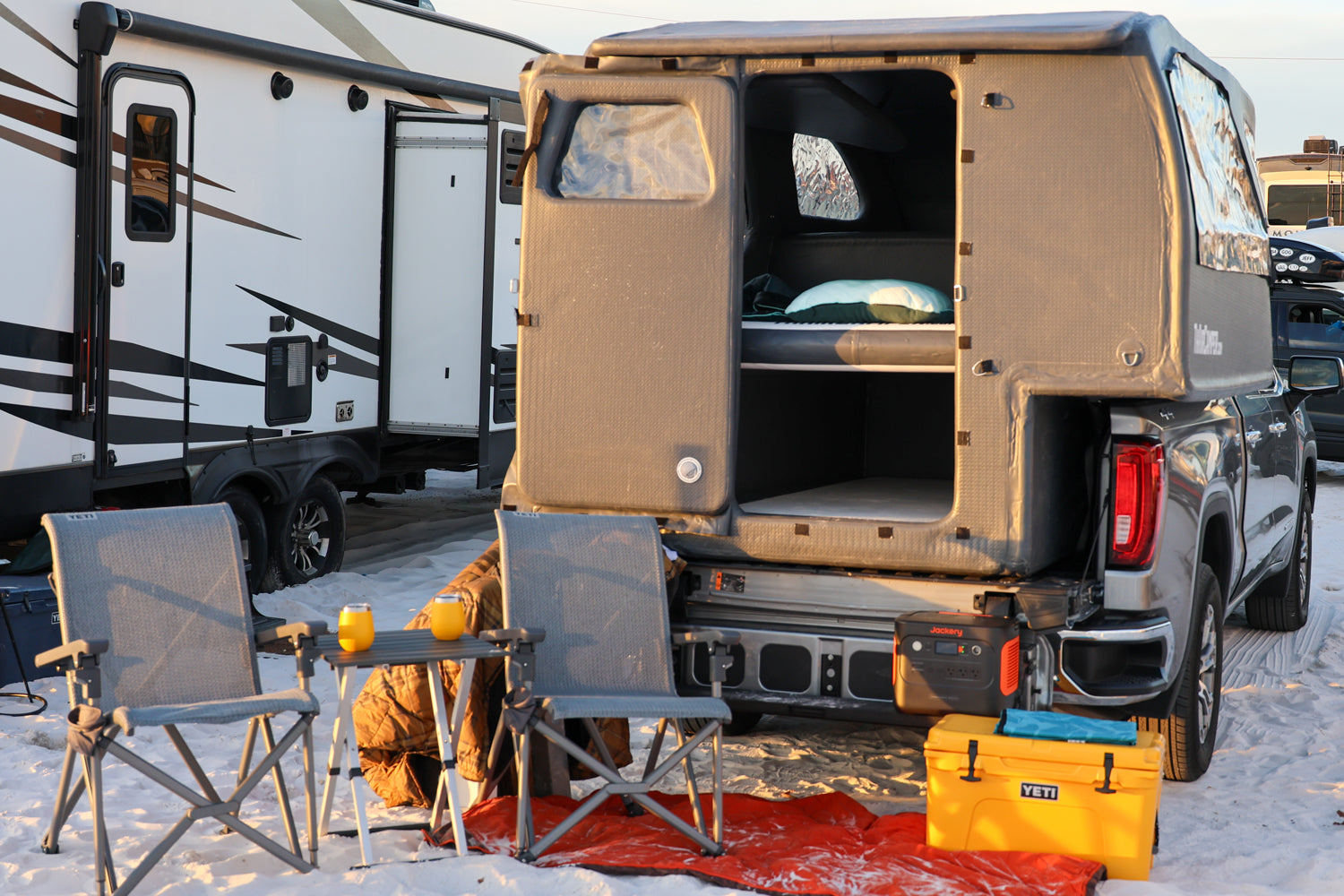
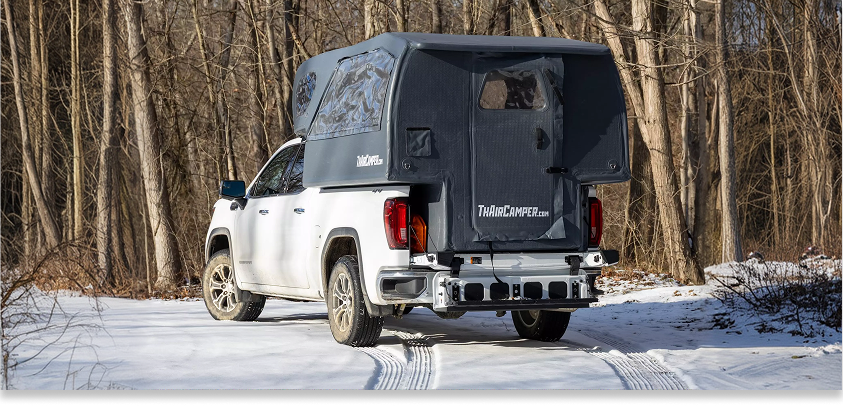
An inflatable truck bed camper, like ThAirCamper, takes the opposite approach. It uses high-pressure air and reinforced drop stitch material to create a rigid, insulated structure that only exists when you need it.
Neither approach is "better" in every situation.
They solve different problems for different types of truck owners. Below is a closer look at how they actually compare.
At the end of the day, it really depends on how you intend to use your truck on a daily basis. Hard shell campers are great for some people, while inflatable truck bed campers are great for others.
Let's jump in!
Weight Comparison

Let's start with weight, as weight really matters, especially once you start building a truck out for overlanding.
Whether it is a Tacoma, a Tundra, or an F150, most trucks were never designed to carry a ton of extra payload once you stack a truck camper, recovery gear, water systems, drawer systems, and everything else that goes into a capable overland setup.
If you're running a hard shell camper, the gross vehicle weight rating (GVWR) and payload limits get tight fast.
Extra weight changes on-road drivability, how the truck handles under braking, and how it performs once you hit the trail, especially climbing grades or working through technical terrain on steep ledges or off-camper sections.
This is where ThAirCamper's weight really stands out. At about 180 lbs., it comes in lighter than most hard shell campers on the market, including popular options like Leer caps, GFC wedge campers, AT Overland's Habitat, Super Pacific's X1, the Tune Outdoor M1, Four Wheel Campers' Project M, and the Alu-Cab Canopy Camper.
The difference in feel is really instant. The truck stays nimble, grades and inclines are easier to climb, and the extra weight is barely noticeable, almost like it is not even there.
Weight Specs: ThAir Vs. Others

| Camper | Type | Approx. Weight |
|---|---|---|
| ThAirCamper | Inflatable | ~180 lbs |
| Leer fiberglass cap | Hard shell | ~150 to 200 lbs |
| GFC V2 | Hard shell, wedge camper | ~275 lbs |
| AT Overland Habitat | Hard shell, pop top | ~340 lbs |
| Super Pacific X1 | Hard shell, wedge camper | ~342 to 390 lbs |
| Tune Outdoor M1 | Hard shell, pop top | ~360 to 400+ lbs |
| Four Wheel Campers Project M | Hard shell, pop top | ~425 to 500 lbs |
| Alu-Cab Canopy Camper | Hard shell, pop top | ~460 to 550 lbs |
| Traditional slide in camper | Hard shell | ~900 to 1,500+ lbs |
Weights above are approximate figures pulled from manufacturer specs and independent owner reviews; actual weight will vary by cab configuration, options, and accessories.
- Inflatable camper, about 180 lbs.
- Popular hard shell campers, roughly 150 lbs., on the low end up to 550+ lbs. for pop-top and wedge-style models, and 900 to 1,500+ lbs. for full-size slide-in campers
- Inflatable design sits low in the bed, keeping center of gravity closer to stock
- Heavier hard shell campers add noticeable weight above the bed rails
- Lighter setups typically mean less strain on suspension, easier climbs on grades, and better fuel economy
Numbers aside, the real benefit is not just what the lighter weight does for handling; it is what it does for how the truck gets used throughout the year.
A lot of overlanders and families camping with kids are not out every weekend. They are camping/overlanding through the summer months, then back to using the truck bed for work, hauling, or daily driving once the season slows down.
That is where ThAirCamper's weight and simplicity pay off. Deflating and removing it is a one person job. A second set of hands makes it faster, but it is not required, and there is no tool kit or dedicated camper jack involved. Once it is off, it packs away easily until next season, and the truck goes right back to being a truck.
For someone who overlands or truck camps occasionally and does not want a permanent 300 to 500+ lb. camper riding on their truck all year, every season, the flexibility with an inflatable camper is unreal.
Once you go from a heavy camper to a lightweight camper, you might never go back to a hard shell. It's just a world of a difference.
Inflatable Vs. Hard Shell Setup & Takedown Differences

This is where the two categories are very different.
A hard shell camper is designed to stay mounted, so setup and takedown are not something you do on a regular basis. When you do need to remove or reinstall one, it is typically a 1 to 2 hour job, and often requires a second set of hands, oversize sawhorses, specialty tools, or a proper camper jack.
ThAirCamper is built around the opposite idea.
Using the included rechargeable lithium air pump, it inflates into a full camper shell in about 10 to 15 minutes, and takedown takes roughly the same amount of time.
- Inflatable camper, about 10 to 15 minutes to set up or take down
- Hard shell camper, about 1 to 2 hours, often with help or tools
- Inflatable camper can typically be handled by 1 to 2 people
- Hard shell removal usually requires camper jacks or a dedicated storage rack
For details on the inflation process itself, visit the ThAirCamper product page.
Storage & Space Considerations

A hard shell camper takes up its full footprint at all times, whether it is mounted on the truck or sitting in a garage between trips. That means dedicated storage space, and in a lot of cases, a truck that stays tied up to camper duty even when you are not camping.
An inflatable camper is a bit different. Once deflated, ThAirCamper packs down into a storage bag or box small enough to fit in a garage, closet, or even behind a seat, depending on your setup.
- Inflatable camper, packs into a compact bag or box
- Hard shell camper, requires garage or dedicated storage space at full footprint
- Inflatable design works well for occasional or seasonal use
- Hard shell design works well when the truck is fully dedicated to the camper
Cost Comparison, Budget Vs. Premium Campers

Cost is often the deciding factor, and the gap between these two categories is significant.
ThAirCamper falls in the roughly $3,000 to $5,000 range (higher end when considering accessories and aftermarket support). Hard shell truck campers, depending on size, materials, and features, commonly run anywhere from $15,000 to $30,000 or more!
That premium price tag on a hard shell camper typically buys better long-term insulation, a more controlled interior environment, and a system built for extended, full-time use. An inflatable camper trades some of that for a much lower entry point and far more flexibility day to day.
- Inflatable camper, roughly $3,000 to $5,000
- Hard shell camper, roughly $15,000 to $30,000+
- Lower cost entry point makes inflatable campers accessible to more truck owners
- Higher cost hard shell campers are geared toward dedicated, long-term builds
No Permanent Install Vs. Fixed Camper Systems

This may be the biggest philosophical difference between the two categories. A hard shell camper is a semi-permanent or permanent system. It typically requires bed mounts, turnbuckles, or brackets, and in some cases, drilling into the bed itself.
ThAirCamper was designed around a different priority, keeping the truck usable. It secures using your truck's factory tie-down anchors, with no drilling and no permanent modification. Once removed, the bed goes right back to normal use, whether that means hauling, work, or just an empty bed.
- Inflatable camper, no drilling, secures with factory tie-down anchors
- Hard shell camper, semi-permanent or permanent mounting hardware
- Inflatable camper leaves full bed access when removed
- Hard shell camper generally stays mounted, limiting daily truck use
Hard Shell Vs. Inflatable, Pros & Cons

Hard Shell Camper
Pros
- Built tough, full-time ready
- Better cold weather insulation
- Long lifespan
Cons
- Heavy, 300 to 1,500+ lbs.
- Costly, $15k to $30k+
- Permanent install, limits daily use
ThAirCamper (Inflatable)
Pros
- Lightweight, about 180 lbs.
- Sets up in 10 to 15 minutes
- No permanent install
- Budget friendly, $3k to $5k
Cons
- Best suited for 3-season use
- Fabric build, not metal shell
Which One Is Right For You?

Hard shell camper?
If your priority is long term, full time overlanding with maximum strength on the outside and a truck that stays dedicated to camping or needs full time coverage, a hard shell camper is a great option. It is a heavier, higher cost investment up front, but it is built for that kind of application.
Inflatable camper?
If you want your truck to stay flexible, work for you on weekdays, and still turn into a comfortable camper on weekends with plenty of space for the whole family, an inflatable camper like ThAirCamper is hard to beat. It is lightweight, sets up in a fraction of the time, and costs far less than a traditional hard shell camper.
| Category | Inflatable Camper | Hard Shell Camper |
|---|---|---|
| Weight | ~180 lbs. | ~150 to 1,500+ lbs. (varies by type) |
| Setup/Takedown | ~10 to 15 minutes | ~1 to 2 hours |
| Storage | Compact bag or box | Full footprint, dedicated space |
| Cost | ~$3,000 to $5,000 | ~$15,000 to $30,000+ |
| Install | No permanent install, factory anchors | Semi-permanent or permanent mounting |
To see current pricing and specs, visit the ThAirCamper product page, or explore the full lineup on the ThAirCamper homepage.

Leave a comment
This site is protected by hCaptcha and the hCaptcha Privacy Policy and Terms of Service apply.